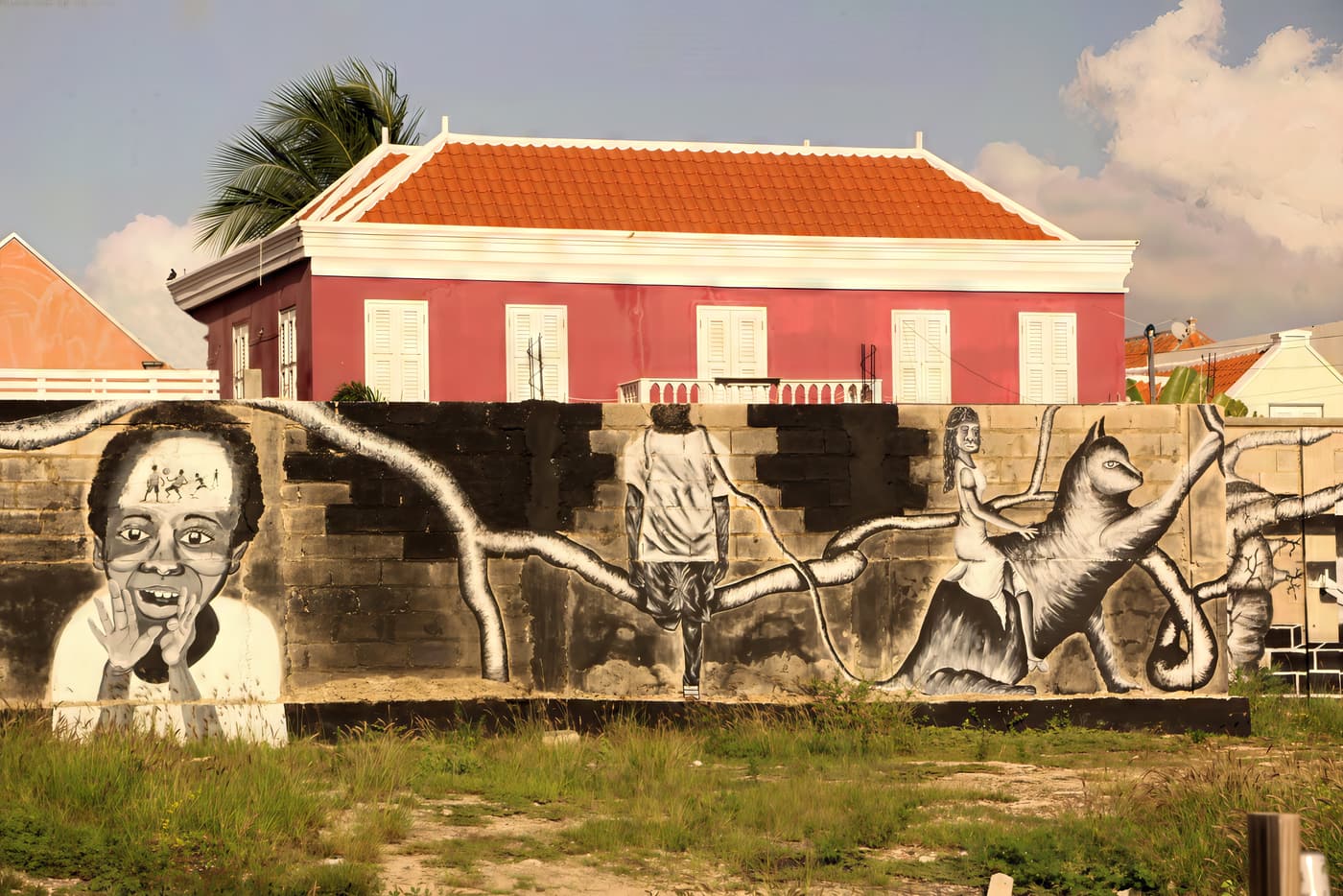
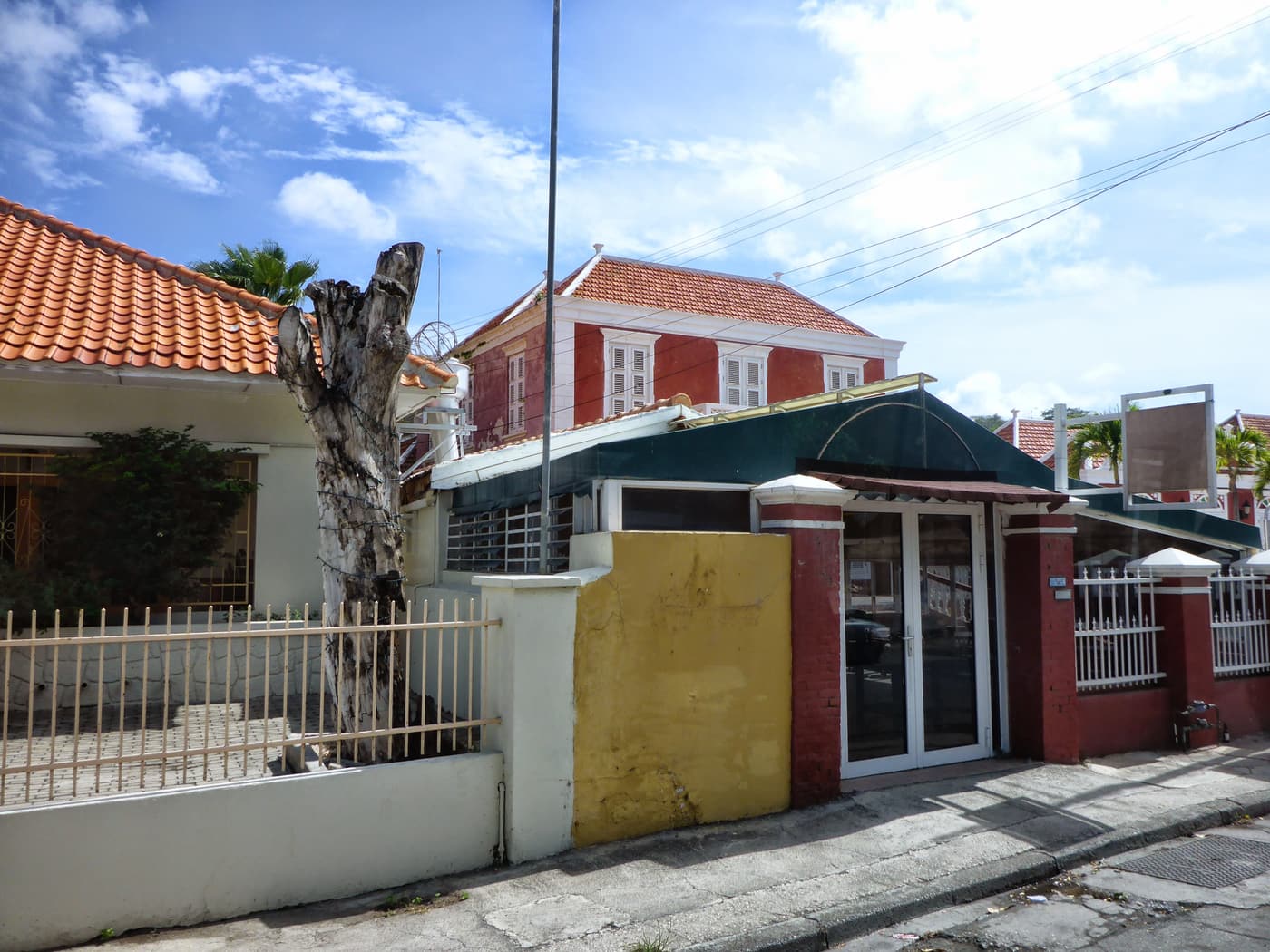
Otrobanda — “the other side” — grew up across St Anna Bay from Punda in the 18th century, when the walled town ran out of space. It is less polished than Punda and more lived-in: a tangle of lanes and courtyards between the waterfront and the hill, with old town houses, small churches, corner shops and, increasingly, murals painted on its walls.
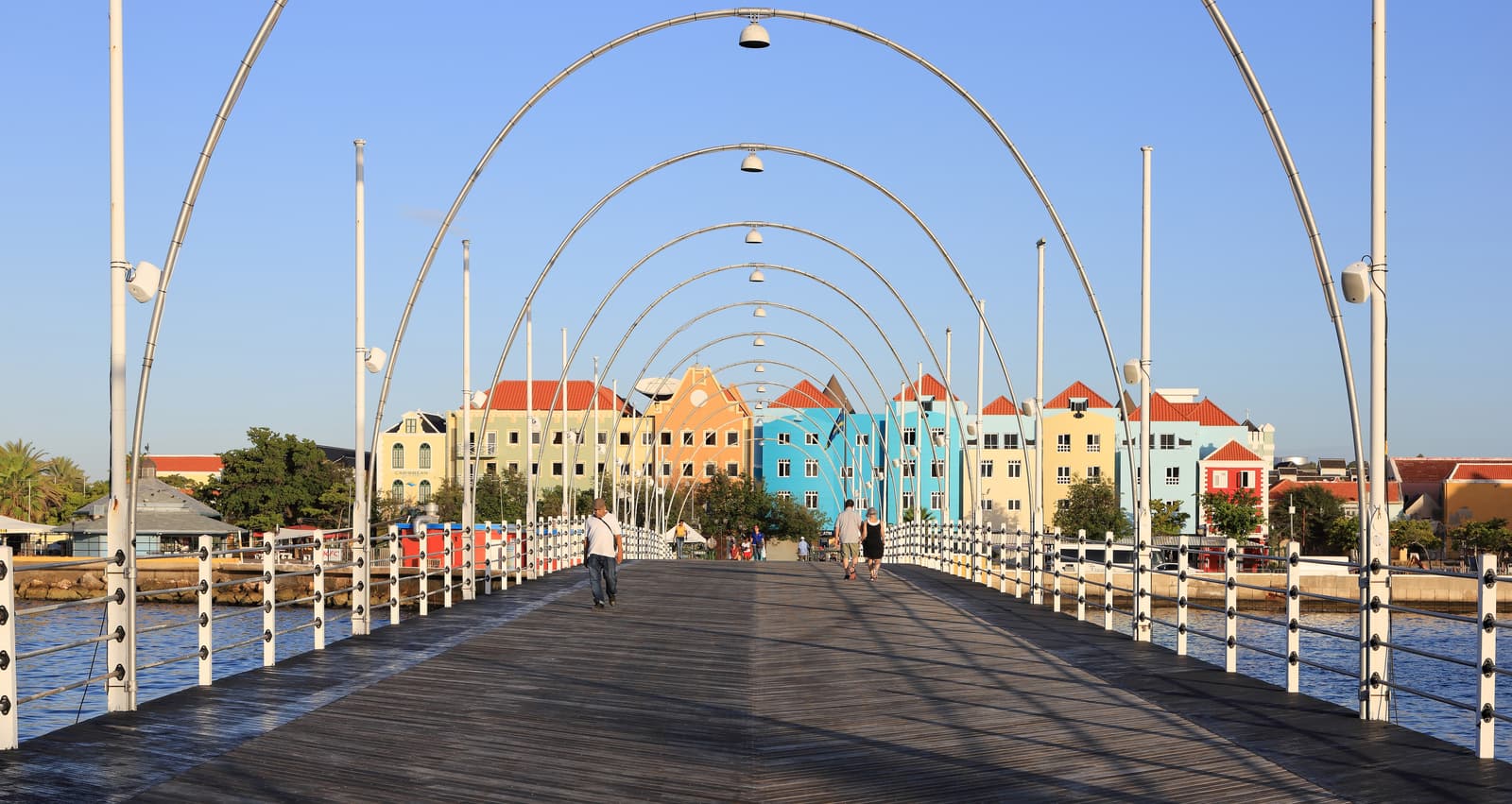
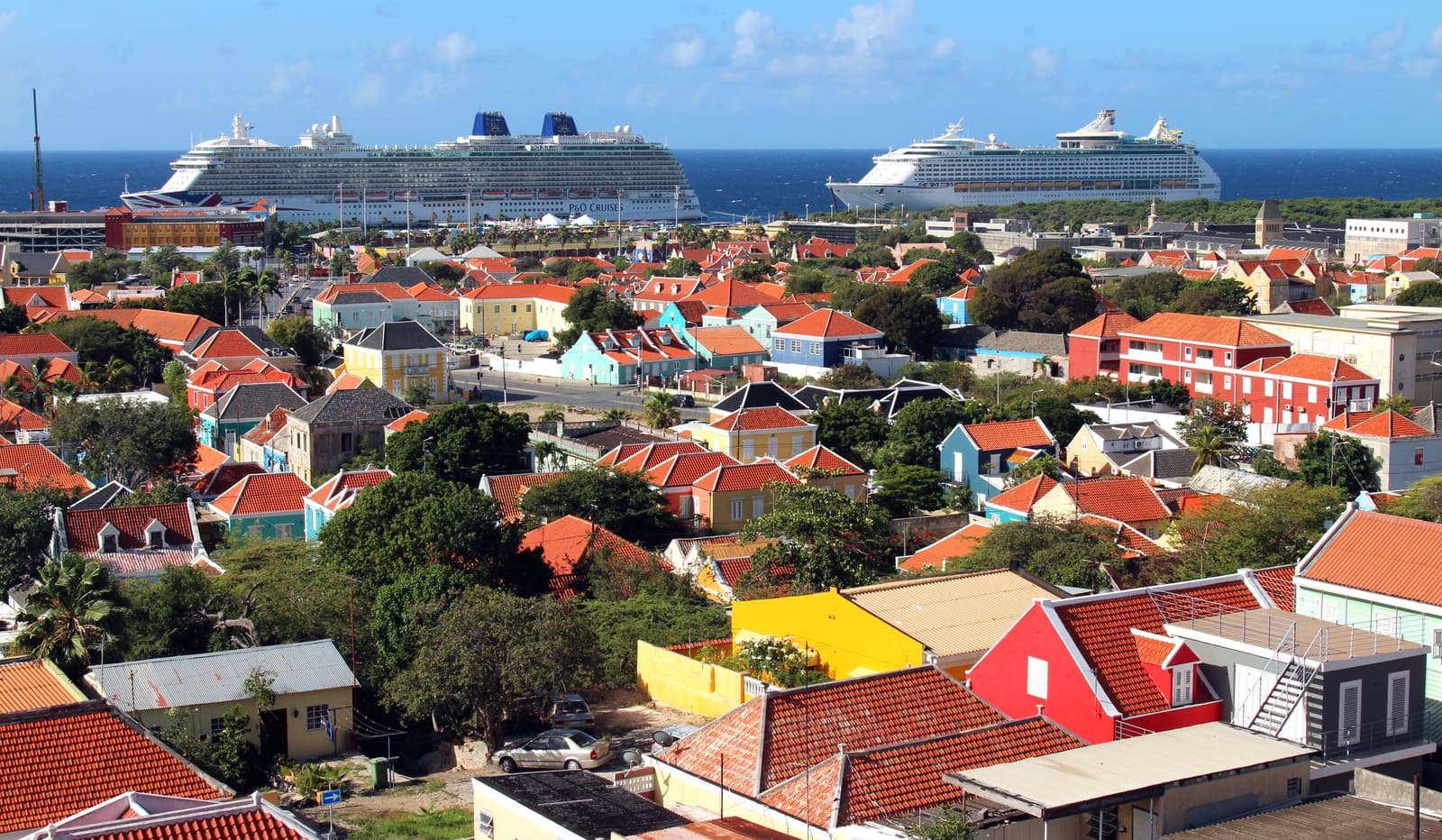
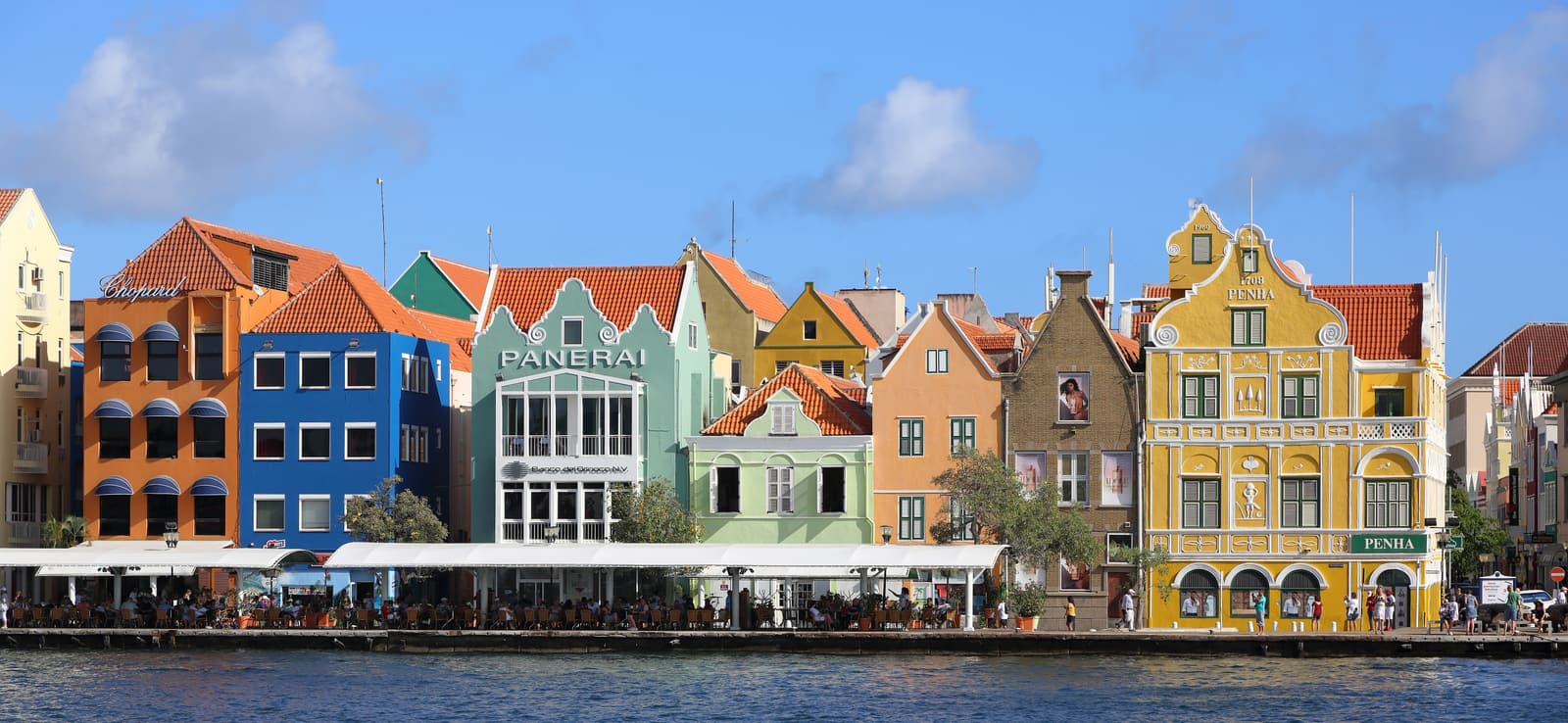
For most cruise passengers it is the first part of Curaçao they see, because the Mega Pier cruise berths sit at the harbour mouth just beyond Rif Fort. From the Otrobanda waterfront you get the classic view of the Handelskade across the water, and the Queen Emma Bridge is a few minutes’ walk away.
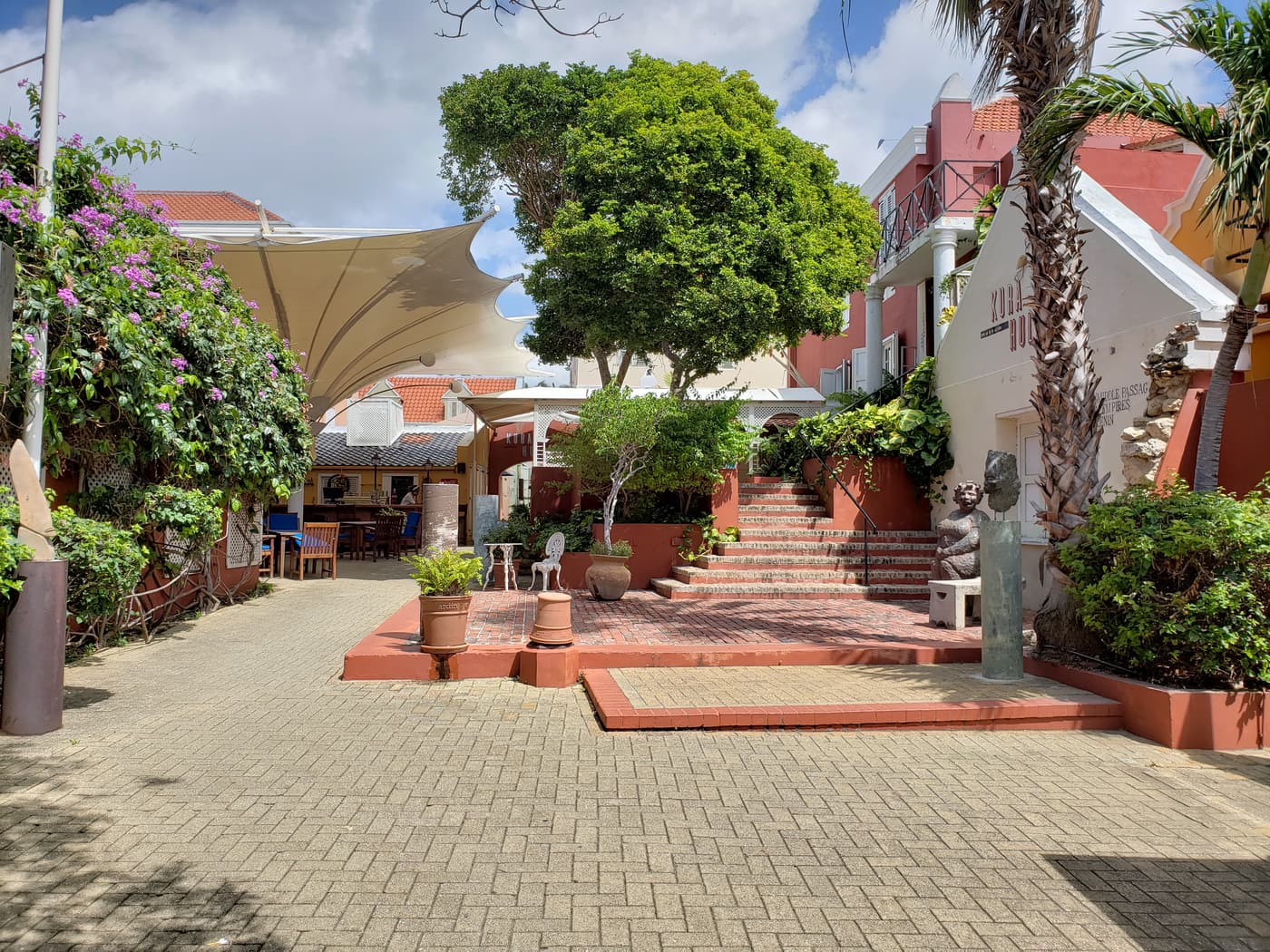
The district is also the home of Museum Kura Hulanda, one of the most important museums in the Caribbean on the transatlantic slave trade, set in a block of restored 19th-century buildings.
Top things to do: Otrobanda & Kura Hulanda
Visit Museum Kura Hulanda
Founded by a Dutch entrepreneur in the late 1990s, the museum tells the story of the Atlantic slave trade — in which Curaçao was a major transit point — and of West African cultures, with a reconstruction of a slave-ship hold among its exhibits. It is sobering and important. Opening hours have varied in recent years, so check before you go.
Hunt for murals in the backstreets
Otrobanda’s alleys have become an open-air gallery, with large murals by local and international artists on gable ends and courtyard walls. A guided street-food and murals walk finds the hidden ones and adds tastings along the way.
Watch the waterfront from Rif Fort
The 19th-century Rif Fort at the harbour mouth now houses shops and restaurants; its walls are a good place to watch ships slide through the narrow channel and the bridge swing open. The terraces along the Otrobanda waterfront face the Handelskade and catch the sunset light.
Look in at the Curaçao Museum
A small museum in a 19th-century building in Otrobanda with paintings, furniture and objects from the island’s colonial and later history — a useful complement to Kura Hulanda.
Admire the Queen Juliana Bridge
Inland, the high arch of the Queen Juliana Bridge carries traffic over the harbour at a height that lets tankers pass beneath. It is best seen from the water or the Otrobanda hillside.
How to get to Otrobanda & Kura Hulanda
- From the cruise piers: you are already here — Rif Fort and the waterfront are a few minutes’ walk from the Mega Pier.
- From Punda: walk across the Queen Emma Bridge or take the free ferry when it is open.
- By bus: buses for the west of the island leave from the Otrobanda terminal near the bridge.
- From the airport: about 20 minutes by taxi.
Insider tips
- Stick to the main lanes after dark and use a taxi late at night, as you would in any port district.
- Kura Hulanda deserves at least an hour and a half; do it before the beaches, not after.
- The waterfront terraces are pleasant for a drink at sunset when the cruise crowds have left.
- Cruise passengers: allow time to return through the security gate before all-aboard.
Best tours for Otrobanda & Kura Hulanda
These well-reviewed experiences are the easiest way to see Otrobanda & Kura Hulanda:
Food walk from US$50 Otrobanda Street Food & Hidden Murals Walk
Cross to the “other side” of Willemstad with a local guide: four tastings of Curaçao food, the murals hidden in Otrobanda’s alleys and the neighbourhood’s Afro-Caribbean history.
- Four tastings of local food
- Murals in Otrobanda’s side streets
- Afro-Caribbean and colonial stories
 Walking tour from US$24
Willemstad Highlights Walking Tour with a Local Guide
The most-reviewed introduction to the capital on GetYourGuide and one of the cheapest: a local guide walks you through the World Heritage streets, the waterfront and the mural-covered lanes, with tips for the rest of your trip.
- UNESCO-listed Punda and Otrobanda on foot
- Murals, landmarks and back streets
- Practical tips for the rest of your stay
 Walking tour from US$37
Willemstad: Curaçao’s Colourful History Walking Tour
A two-hour walk that puts the colours into context: how a Dutch trading post became a multicultural port city, told through its streets, markets and architecture.
- History and culture of the island
- Markets, Dutch colonial architecture and murals
- Small groups with a guide