Punda — “the point” in Papiamentu — is the oldest part of Willemstad, the walled town the Dutch West India Company laid out on the eastern side of St Anna Bay in the 17th century. Together with Otrobanda across the water and the old harbour behind it, it was inscribed by UNESCO in 1997 as the Historic Area of Willemstad: a Dutch colonial town transplanted to the tropics and coloured in, quite literally, by the Caribbean.
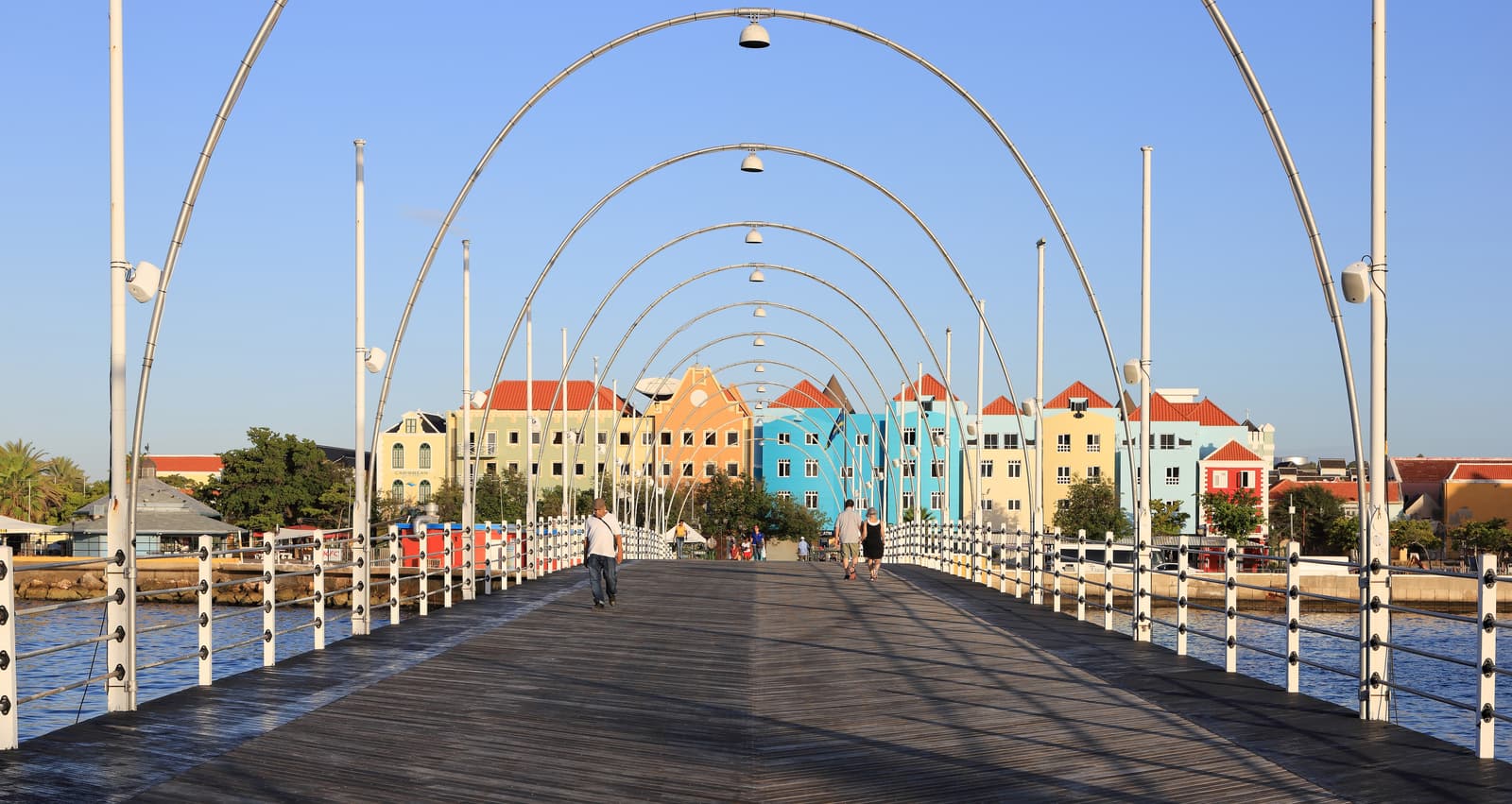
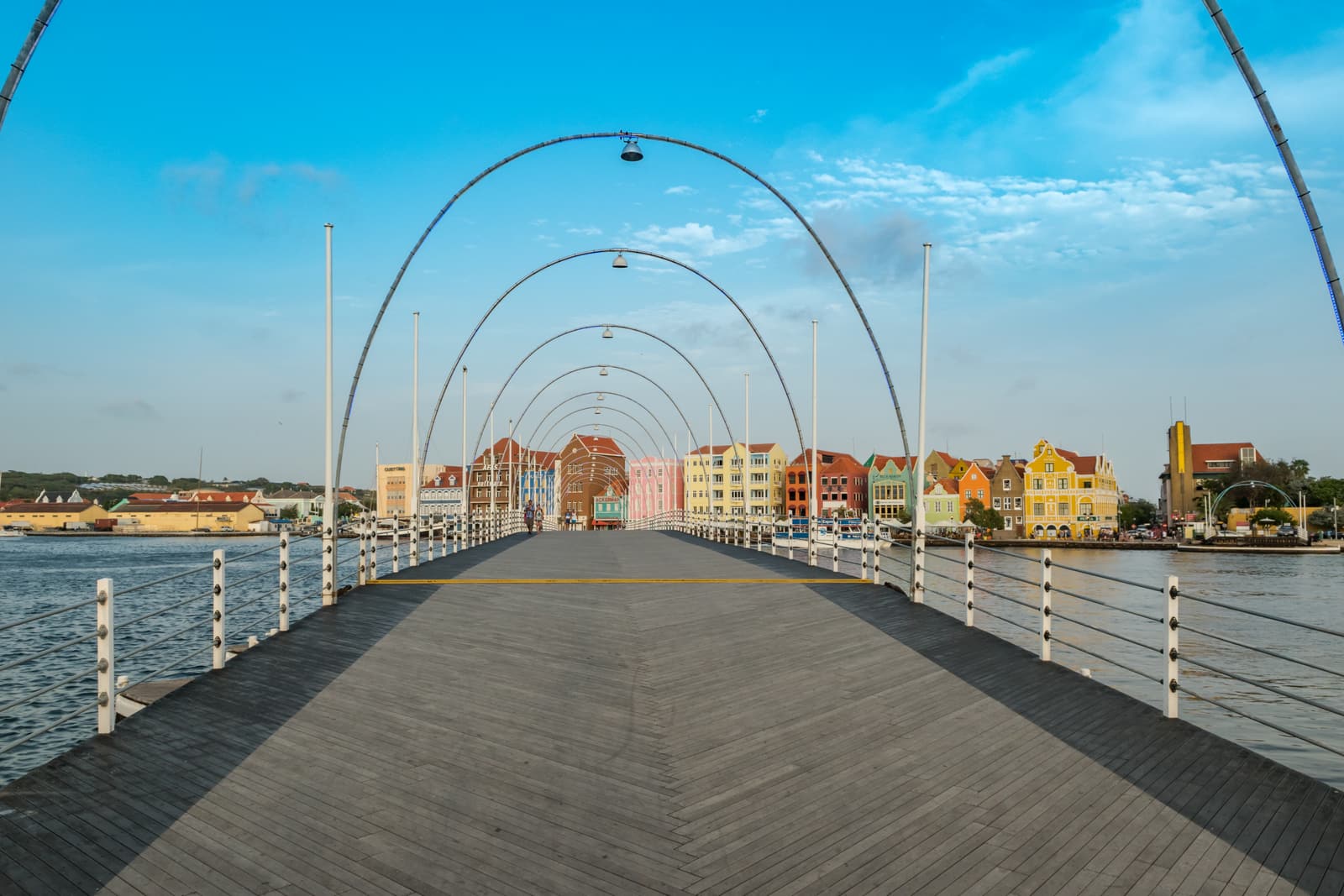
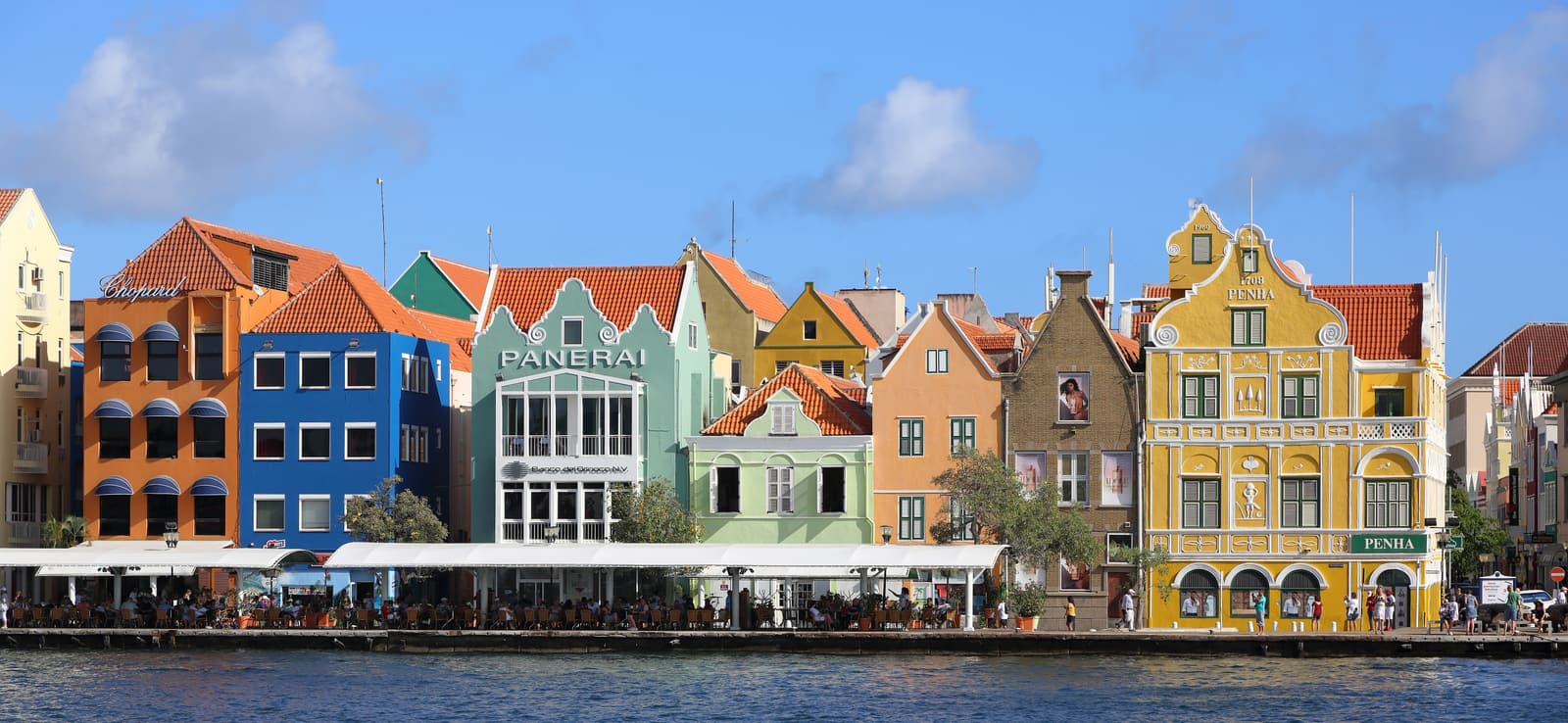
The famous view is the Handelskade, the row of gabled merchant houses facing the harbour in shades of yellow, salmon, mint and blue. A popular story credits an early-19th-century governor with ordering the colours because the glare of whitewash gave him headaches; whether or not it is true, the effect is the most photographed waterfront in the Dutch Caribbean.
Behind the waterfront, Punda is a compact grid of shopping streets, small squares and narrow alleys, with the Mikvé Israel-Emanuel synagogue, Fort Amsterdam and the floating market all within ten minutes’ walk. It is busiest on cruise days and quiet after shops close in the early evening; our cruise-day guide has timings.
Top things to do: Punda & the Handelskade
Walk the Handelskade and cross the Queen Emma Bridge
Stroll the waterfront for the façades, then walk across the Queen Emma Bridge, a pontoon bridge first opened in 1888 that swings aside to let ships into the harbour. When it is open, free ferries shuttle pedestrians across the bay. The best photographs of the Handelskade are taken from the Otrobanda side, in the morning or late afternoon.
Visit the Mikvé Israel-Emanuel synagogue
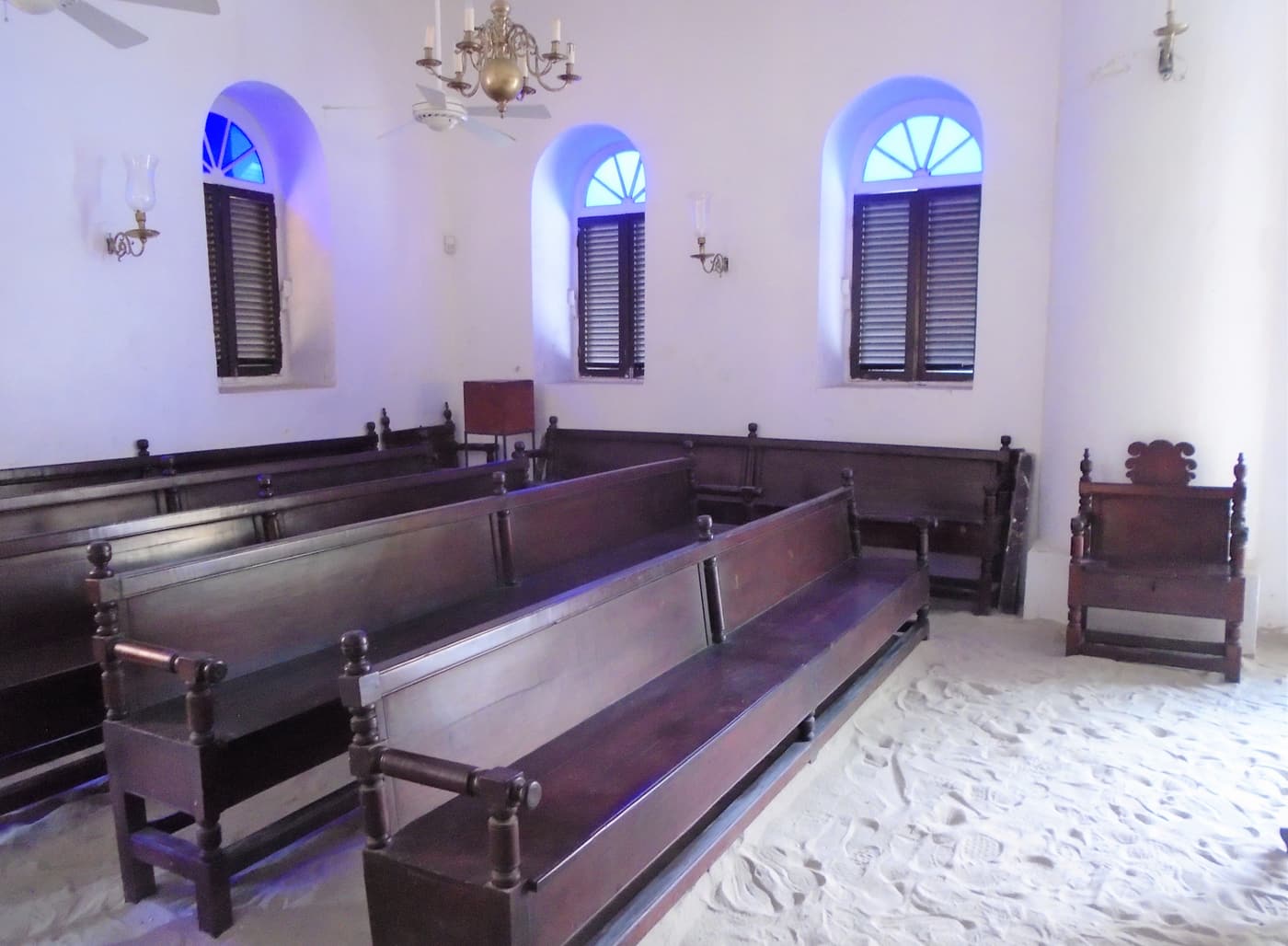
The congregation was founded in the 17th century by Sephardic Jews from Amsterdam, and the present synagogue, consecrated in 1732, is the oldest in continuous use in the Americas. Its floor is covered in sand. A small museum next to it displays ceremonial silver and documents. An entrance fee applies, it is closed on the Sabbath and Jewish holidays, and modest dress is expected — check opening times before you go.
See Fort Amsterdam and the Fort Church
The 17th-century fort at the harbour mouth is still the seat of government. You can walk into the courtyard, and the Fortkerk, the old Protestant church inside the walls, has a small museum and a cannonball lodged in its wall, said to date from a British attack in 1804.
Browse the floating market and eat at Plasa Bieu
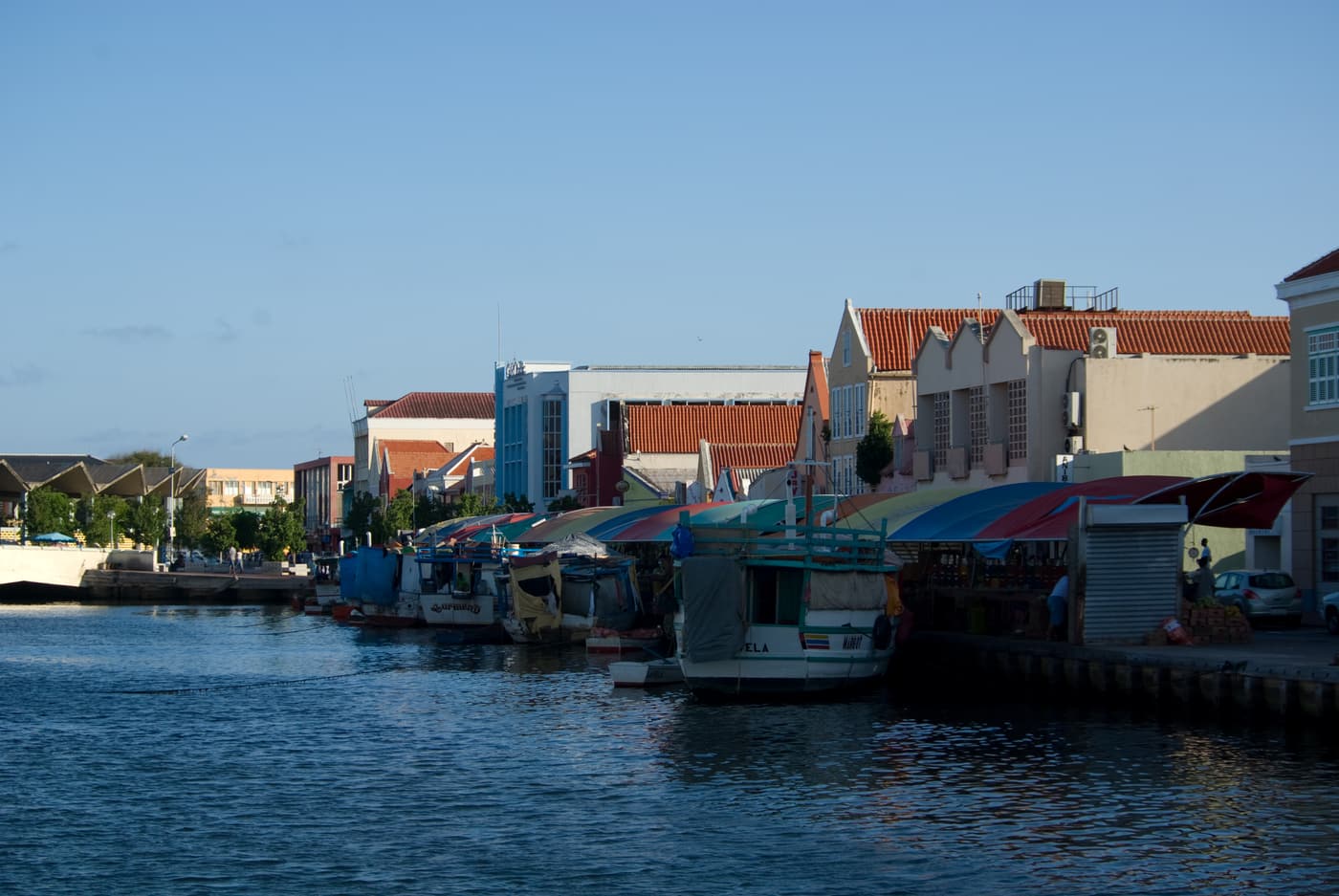
Along the Sha Caprileskade on the Waaigat, traders have long sold fruit, vegetables and fish from boats that crossed from Venezuela. The supply has been irregular in recent years, so treat it as a bonus. Nearby, Plasa Bieu, the old market hall, is the classic place for a cheap local lunch of stews, fried fish and funchi at shared tables.
Cross into Scharloo and Pietermaai
North of the Waaigat, the merchant mansions of Scharloo include the ornate “wedding cake house”. East of Punda, Pietermaai has been restored from near-ruin into the island’s liveliest district for boutique hotels, bars and restaurants. Both are UNESCO-protected and a short walk away.
How to get to Punda & the Handelskade
- From the cruise piers: walk 10–15 minutes along the Otrobanda waterfront and cross the Queen Emma Bridge (or the free ferry when the bridge is open).
- From the airport: about 20–25 minutes by taxi, depending on traffic.
- By bus: the main island bus terminal for the east side is in Punda; buses from Otrobanda and most districts end here.
- Parking: paid car parks surround the centre; street parking in Punda itself is limited and usually metered.
Insider tips
- Come early or late on cruise days: from mid-morning to mid-afternoon the bridge and the main shopping streets are crowded.
- Many shops close by early evening and on Sundays; the restaurants of Pietermaai and the Otrobanda waterfront stay lively later.
- Take water and a hat — the streets are hot and there is little shade on the waterfront.
- The bridge can stay open for some time when large ships pass; the ferries are free and frequent.
- A guided walking tour adds the stories behind the colours for very little money.
Best tours for Punda & the Handelskade
These well-reviewed experiences are the easiest way to see Punda & the Handelskade:
 Walking tour from US$24
Willemstad Highlights Walking Tour with a Local Guide
The most-reviewed introduction to the capital on GetYourGuide and one of the cheapest: a local guide walks you through the World Heritage streets, the waterfront and the mural-covered lanes, with tips for the rest of your trip.
- UNESCO-listed Punda and Otrobanda on foot
- Murals, landmarks and back streets
- Practical tips for the rest of your stay
Walking tour from US$37 Willemstad: Curaçao’s Colourful History Walking Tour
A two-hour walk that puts the colours into context: how a Dutch trading post became a multicultural port city, told through its streets, markets and architecture.
- History and culture of the island
- Markets, Dutch colonial architecture and murals
- Small groups with a guide
Food walk from US$90 Curaçao Foodie Walking Tour with Tastings
An eating tour of the capital that ends with a proper local meal at Plasa Bieu, the old market hall where cooks serve stews and fried fish at long shared tables.
- Local snacks along the way
- A taste of the island’s liqueur
- A local lunch at Plasa Bieu, the old market hall
Land & sea tour from US$79 Curaçao: Amphibious Bus Tour That Drives Into the Sea
Half bus, half boat: a sightseeing drive that ends with the vehicle rolling down a ramp into Spanish Water for a cruise around the lagoon. Fun with children and for anyone who prefers to stay seated.
- Sightseeing by road, then straight into the water
- A cruise on Spanish Water
- No getting off and on boats